Sweet Tooth Doctor
Are You Clenching Your Teeth Without Realizing It?
We all handle stress in different ways.
Some people listen to music. Some go shopping. Some work out, play sports, take a nap, or just try to push through the day. These are the things we do consciously to relieve stress.
But sometimes, our body handles stress in ways we do not even notice.
One very common example is clenching your teeth.
Clenching happens when the jaw muscles tighten and press the upper and lower teeth together with extra force. The tricky part is that many people do not realize they are doing it. It can happen while you are working, driving, concentrating, exercising, or even relaxing. For some people, it also happens during sleep.
So how can you tell if you might be clenching?
One sign is seeing little indentations or “scalloped” marks along the sides of your tongue. You may also notice jaw soreness, headaches, sensitive teeth, or tightness around your face when you wake up. Another sign we often see at the dental office is something called an abfraction.
An abfraction is a small notch or missing area of tooth structure near the gum line. I usually describe it as a little wedge-shaped or V-shaped notch on the tooth. These areas can sometimes become sensitive, especially to cold drinks, brushing, or sweets.
Abfractions are often confused with abrasions, but they are not exactly the same. Abrasions are smoother areas of tooth wear near the gum line, and they are commonly caused by brushing too hard or using a very abrasive toothpaste. Acidic foods and drinks can also make tooth structure weaker and easier to wear down.
With abfractions, clenching and bite forces can play a big role. When too much pressure is placed on the teeth over time, the tooth structure near the gum line can start to break down.
So how do we treat abfractions?
The first step is not always to fill the tooth right away. If clenching is still happening every day or every night, the same force can continue to damage the tooth even after it is restored. That is why we usually want to understand and manage the clenching habit first.
We often start with conservative, less invasive options. This may include massaging the jaw muscles before bed, using a warm compress, stretching the jaw gently, reducing habits like chewing on pens or ice, and being more aware of when your teeth are touching during the day. Ideally, when you are resting, your lips can be closed, but your teeth should not be pressed together.
For some patients, anti-inflammatory medication may be recommended short-term if it is safe for them, especially when there is muscle soreness or inflammation. In other cases, a dentist or physician may prescribe a muscle relaxant. These are not for everyone, so it is important to follow professional guidance.
If the jaw muscles are very strong or the clenching is severe, Botox may also be discussed as an option. Botox can help relax the overactive jaw muscles and reduce the intensity of clenching for certain patients.
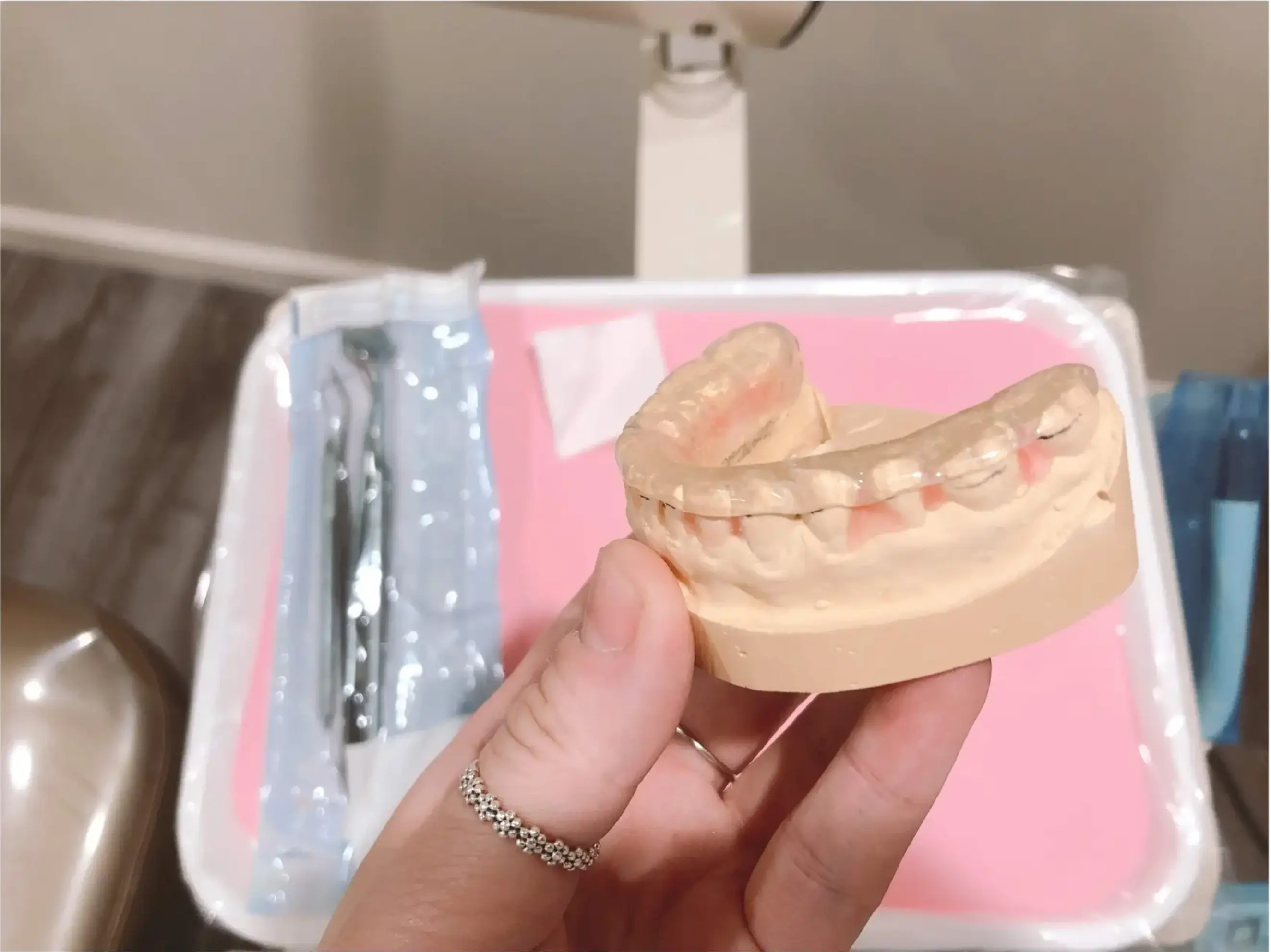
A night guard, also called an occlusal guard, is another common treatment. A night guard does not necessarily stop the habit completely, but it helps protect the teeth from heavy forces while you sleep. It can also help reduce stress on the jaw muscles and protect existing dental work.
Once the clenching is better controlled, we can restore the damaged tooth structure if needed. Depending on how much tooth structure is missing, treatment may be as simple as a tooth-colored filling. In more severe cases, the tooth may need more coverage, such as a crown, to protect it properly.
Because clenching is usually an unconscious habit, you may not notice it until there are visible signs or symptoms. Take a look in the mirror. Do you see notches near your gum line? Do you wake up with jaw soreness? Are your teeth becoming more sensitive?
If something does not look or feel right, come in and let us take a look. Sometimes a small sign can tell us a lot about what is happening with your bite, your jaw muscles, and your teeth. :)